31
Mar
This is not a significant difference, but as a rule, clamp meters are always lighter than multimeters. Clamp meters weigh less because they don’t have an additional thick layer of plastic on the outside as multimeters do.

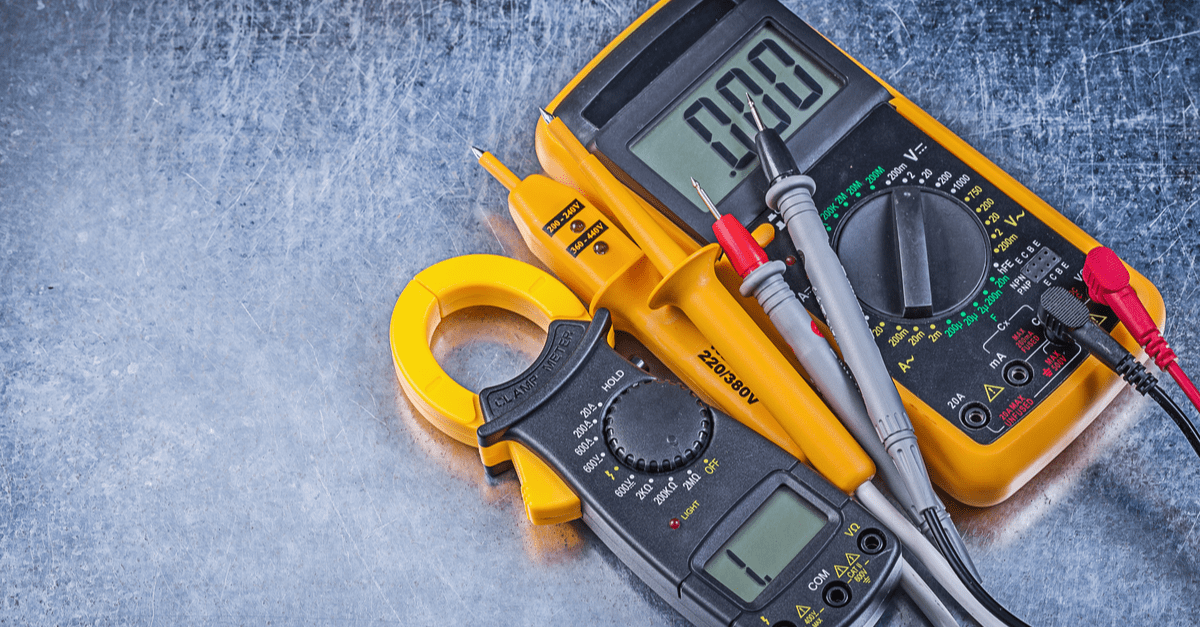
Clamp meter vs multimeter. A clamp meter usually measures to the nearest tenth or hundredth of a unit, rather than in the milliunits available with a dmm. This is not a significant difference, but as a rule, clamp meters are always lighter than multimeters. What’s the difference between a clamp meter and a multimeter?
Meanwhile, an industrial troubleshooter can take advantage of a separate multimeter and clamp meter. For starters, a clamp meter is designed to measure current while a multimeter measures voltage, resistance, continuity, and even low current. Clamp meters, on the other hand, are known for operational safety, meaning you can measure the current of an insulated conductor.
Clamp meters are better for quickly taking current measurements on live circuits. Multimeters provide a better resolution and accuracy than clamp meters, especially on functions such as frequency, resistance, and voltage. It determines the electrical resistance within a circuit and also acts as a voltmeter, ohmmeter and an ammeter.
Most people prefer using a multimeter over a clamp meter because of its accurate measurements, as it also comes in. So, technicians and engineers often prefer clamp meters over multimeters for measuring current. A clamp meter is best suited for measuring ac/dc current, while a multimeter is ideal for measuring resistance, voltage, and frequency with better accuracy and resolution.
You need to open the circuit to connect the leads of the multimeter in series with the load. The main outstanding difference which can be helpful to you is that a clamp meter can measure high current in any condition or situation, while a multimeter usually has high accuracy and better resolution. As you have already seen, a clamp meter is generally not as accurate as it’s multimeter counterpart.
However, klein’s mm500 is slightly bigger in dimensions, 1.78 x 3.07 x 6 inches, with a higher weight of 8.2 ounces. Clamp meters are smaller and more portable than the multimeters. This is sufficient for electrical tasks.
When should you go with a clamp meter. A digital multimeter (dmm) allows you to do electronic work because it offers high resolution, measuring in milliunits—millivolts, milliamps and milliohms. The vast majority of clamp meters can measure up.
When comparing clamp meters versus multimeter, multimeters are more precise than their counterpart, so they test more measurements. Hi, everything is similar except one. Just an old system, multimeters used to have more options for metering, while amp clamps had basic volts ac/dc and amps.
Even after both these models fall under the same pricing with a minimal margin, fluke’s 101 multimeter is quite pocket size with dimensions 1.06 x 2.56 x 5.12 inches with a weight of only 5.6 ounces. These meters are usually pretty accurate with ac and dc measurements within 2%. What are the main differences between a clamp meter and a multimeter?
Now you can get a full featured meter with an amp clamp that does every metering option available. So, in terms of operational safety, multimeters are considered less safe than clamp meters. A clamp metre is a handheld electrical instrument with a body that clamps around the wire and contains sensors on the end.
Generally speaking multimeters have an accuracy of about 0.5% greater than clamp meters for voltages, currents and resistances. So, practically it is dangerous and consume more time to measure the current. This information can be vital if you need to save every gram of weight.
Jd talks about clamp meters and digital multimeters, and when you might want to use one over the other. It also allows you to do. Specialty models can be as accurate as 0.5%.
You can use them for various current tests that require more precise results. You need an amp clamp in order to read an amperage rating without having to have an inline ammeter. Even when they are inside the holster, they will not look quite as huge.
A multimeter provides a higher degree of accuracy than a clamp meter. But what should i use for my electrical needs? You can carry them around easily by placing them inside your pocket or inside your holster.
Clamp meters can measure ac and dc currents, while multimeters can only measure dc currents. For multimeter vs clamp meter, let�s take a look at five major differences between clamp meters and multimeters: They are distinctly different instruments, each with its own advantages.
Clamp meters are the most versatile diagnostic tools for electricians. They are distinctly different instruments, each with its own advantages. Measurement of current with normal multimeters:
Multimeters can measure in milliunits (e.g., milliamps), but clamp meters offer a lower resolution, measuring to the nearest hundredth or tenth. Clamp meters weigh less because they don’t have an additional thick layer of plastic on the outside as multimeters do.
Previous post
Clarifying shampoo for over toned hairNext post
Civil suit while incarcerated