31
Aug
If your corneas are too thin, getting lasik could cause severe vision complications. What are the risks of eye surgery for thin corneas?

Cornea too thin for lasik. With a thin cornea lasik is a higher risk procedure, though not necessarily impossible. Prk surgery solves this issue by removing the very top layer, known as the epithelium, which leaves the rest of the corneal matter available for sculpting by laser. Visit my website below and look at the section about lasek vs lasik
If it has been determined that your corneas are too thin for lasik, we have several options to correct your vision and help get you out of glasses and contacts. If the cornea is too thin, lasik can weaken its structure, causing the cornea to change shape in the near or far future. This is optimal because the corneal flap will need to be about 110 microns thick and the procedure will remove about 16 microns per diopter of vision correction required.
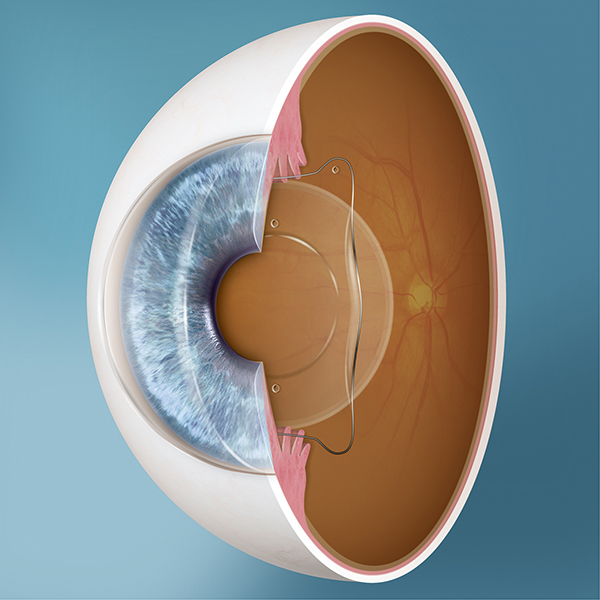
However there are alternative procedures such as photorefractive keratectomy (prk), a surface laser treatment with the same laser used in lasik, or icl (implantable contact lens), which is an intraocular lens implant that treats your myopia without removing any tissue. If i have thin corneas, do i qualify for. That is because the lasik procedure would remove too much of the cornea’s thickness for vision correction.
Instead of applying laser energy to change the shape of the cornea, icl involves placing a tiny lens within the eye to correct vision! It is through reshaping the cornea that lasik corrects your vision. Although a corneal thickness of 485 µm may be normal, which was earlier thought to be a cut off for lasik, you will be considered suitable for lasik only in the absence of forme fruste keratoconus, skew deviation, or keratometric readings greater than 47.00 d.
Every case is different and some people with thin corneas may still be candidates for lasik. Corneas that are too thin; Eye rubbing has been associated with keratoconus and may actually cause severe corneal thinning that could require a cornea transplant.
Also, excessive eye rubbing might be a risk factor for corneal thinning and therefore a contraindication for lasik surgery. During a refractive exam at price vision group, many special tests are performed to ensure you are indeed a good candidate for lasik, including corneal thickness. Your ophthalmologist can talk with you about other conditions that may keep you from having lasik.
Corneal thickness is important because you need to have enough corneal tissue after lasik for the cornea to be firm and stable. Because of this fact, icl has no limitation on how thin a cornea can be. Chronic itchy eyes also may be a symptom of dry eyes or eye allergies.
Prk may be a better choice for some patients with thin corneas because the laser does not penetrate as deeply into the cornea as with lasik. If i have corneas that are 447 and 456 microns thick, would i still be a good candidate for lasek? What are the risks of eye surgery for thin corneas?
Lasik procedures require the creation of a flap of corneal tissue and, for those with thin corneas, make it challenging for reshaping. How do you get thin corneas? For someone with thinner corneas, removing any corneal tissue during lasik could lead to.
This procedure is called icl. One of the reasons i say this is that the cornea is thinnest in its center and gets thicker peripherally. This change in shape, may in turn result in decreased vision.
The cornea is the transparent window at the front of your eye. During a refractive exam, eye specialists perform many tests to ensure you are indeed a good candidate for lasik, including corneal thickness. Ideal candidates for lasik have corneas with normal thickness.
Trattler, m.d., director, cornea, center for excellence in eye care, miami. Good news, i helped invent lasek when i was at harvard so i could safely treat patients with thin cornea who cannot get lasik please do exactly the following: Diabetes that is not controlled well;
Your corneas are too thin if your corneas are too thin, you cannot safely have the lasik procedure. Corneal thickness requirements for lasik. This condition where the cornea becomes warped due to weakness caused by lasik is called keratectasia.
Options include making a thinner lasik flap, prk, or visian icl. There are a number of procedures that will be able to correct your vision, such as contact lenses that are inserted into your eye (implantable contact lenses),. During lasik, you must have enough corneal tissue, as it is reshaped during the procedure.
If your corneas are too thin, getting lasik could cause severe vision complications. The reality is that most people’s corneas are thick enough to have laser surgery. It is for this reason that lasik is not suitable for you if you have a very thin cornea.
Your eye surgeon will need to do a number of tests and measurements to ascertain whether there is enough tissue for a successful corneal flap and whether there is enough tissue to reshape the cornea correctly. If the tissue is too thin, however, we cannot create a sufficient flap, and the reshaping will not be effective. The only exception is for people that have very thin corneas, in which in case we may consider another procedure.
They can lead to a variety of vision symptoms that can have short term and long term effects. Additionally, it may disqualify you from being able to go through with certain eye surgeries. If you have a thin cornea, then it may become too weak after surgery to maintain its shape.
A history of having certain eye infections; The same holds true for anyone with an especially strong eyeglass or contact lens prescription. Looking strictly at the numbers you have provided, it does not seem to appear that your corneas are too thin for lasik.
Candidates for lasik eye surgery. Thin corneas are when the thickness falls below 500 microns (half a millimeter) since the average normal thickness of a cornea is about 540 microns. People with thin corneas, or those whose corneas are not shaped normally, are not good lasik candidates.
You may be wondering if your cornea is too thin for lasik, as this is one of the main reasons individuals cannot have laser eye surgery. Are my corneas too thin for lasik. The average corneal thickness is between 520 microns and 540 microns, however, the normal range for cornea thickness can range from as thin as 470 to as thick as 630 microns.
Previous post
Corner stores that cash checksNext post
Corinna kopf onlyfans resdit