
14
Apr
However, delta g naught remains the same because it is still referring to when the rxn is at standard conditions. Shields explains the relationship between the free energy of reaction and the equilibrium constant k.
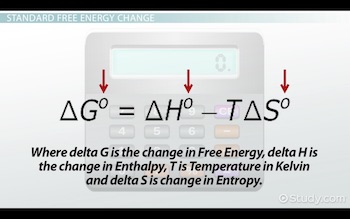
Delta g vs delta g naught. It is the standard free energy. The change in gibbs free energy (δg) for a system depends upon the change in enthalpy (δh) and the change in entropy (δs) according to the following equation: Delta g = 0 at equilibrium, not delta g0.
What is the difference between delta g and delta g naught? The reason professor lavelle emphasized it is because delta g naught is always the same because it is referring to when the reactants/products are at standard temperature/pressure.jan 29, 2017 Why is delta g naught not zero at equilibrium?
Δg° is related to the equilibrium constant by the following equation: Delta g = delta g0 + rtlnq, where q = product/reactants expression. However, delta g naught remains the same because it is still referring to when the rxn is at standard conditions.
However, delta g naught remains the same because it is still referring to when the rxn is at standard conditions. Thus, deltag becomes equal to deltagnaught. We define δg 0 ‘ (pronounced “delta g naught prime”) as the free energy change of a reaction under “standard conditions” which are defined as:
So delta g0 is not necessarily 0 be it at 25 deg c and 1 atmosphere or otherwise. However, delta g naught remains the same because it is still referring to when the rxn is at standard conditions. I know that delta g naught is used to find the gibbs free energy of chemical reaction during standard condition and delta g is used to find gibbs free energy in.
For the standard state of formation: What is the difference between delta g and delta g naught prime? Delta g naught prime means that the ph is 7 (physiologic conditions) everything else is the same.
Delta g naught prime means that the ph is 7 (physiologic conditions) everything else is the same. So as the chemical rxn approaches equilibrium, delta g (without the naught) approaches zero. The deviation of delta g from delta g0 is given by:
The concentration of [h+] now isn’t 1 molar because 1 molar concentration would be an extremely low ph (0). We define δg0� (pronounced “delta Delta g naught prime means that the ph is 7 (physiologic conditions) everything else is the same.
The partial pressure of any gas involved in the reaction is 0.1 mpa. As the rxn goes towards equilibrium, delta g (without the naught) changes because the rxn is proceeding. Delta g and delta g naught.
As the rxn goes towards equilibrium, delta g (without the naught) changes because the rxn is proceeding. So as the chemical rxn approaches equilibrium, delta g (without the naught) approaches zero. Δ g is more general, the gibbs free energy at any temperature.
The standard condition means the pressure 1 bar and temp 298k, delta g naught is the measure of gibbs free energy. All reactants and products are at an initial concentration of 1.0m; Delta g and delta g naught you are right, the difference between the two is that delta g naught is at standard conditions.
So as the chemical rxn approaches equilibrium, delta g (without the naught) approaches zero. Delta g naught means that the reaction is under standard conditions (25 celsius, 1 m concentraion of all reactants, and 1 atm pressure). The difference between delta g naught and delta.
The reason professor lavelle emphasized it is because delta g naught is always the same because it is referring to when the reactants/products are at standard temperature/pressure. Q is now k as q was for non equilibrium. Delta g0 is at standard conditions, while delta.
Is delta g naught constant? Delta g is used to find gibbs free energy in nonstandard conditions while delta g naught is used to determine gibbs free chemical reaction energy under normal conditions. Delta g naught means that the reaction is under standard conditions (25 celsius, 1 m concentraion of all reactants, and 1 atm pressure).
Enthalpy, denoted h and measured in j/mol, is total energy. Delta g naught prime means that the ph is 7 (physiologic conditions) everything else is the same. Delta g naught means that the reaction is under standard conditions (25 celsius, 1 m concentraion of all reactants, and 1 atm pressure).
What does it mean if delta g naught is positive? When you reach equilibrium the chemical potential of both sides of the reaction are equal, so the δg is zero. What is the difference between delta g and delta g?
Delta g naught is an intensive property (values are calculated at standard conditions), whereas delta g isn�t. Click to see full answer. What happens when delta g is equal to delta g naught?
Using delta g naught helps observe a reaction in unstandard conditions. We can take away a few generalizations regarding when a. Δg 0 is not the free energy at equilibrium.
In other words, if product and reactant are equally favored at equilibrium, it�s because there is no difference energetically speaking. Δ g 0 describes the amount of gibbs free energy that the system has under standard conditions. Delta g naught means that the reaction is under standard conditions (25 celsius, 1 m concentraion of all reactants, and 1 atm pressure).
You are right, the difference between the two is that delta g naught is at standard conditions. However, it would be useful to review what exactly the standard state is: The concentration of [h+] now isn�t 1 molar because 1 molar concentration would be an extremely low ph (0).
As the rxn goes towards equilibrium, delta g (without the naught) changes because the rxn is proceeding. Shields explains the relationship between the free energy of reaction and the equilibrium constant k.
Previous post
Demi bra vs full coverageNext post
Delonghi pinguino heat mode