
09
Oct
Diamonds have a tendency to flouresce or glow under long wave ultraviolet light. In rare cases, high levels of fluorescence can make stones appear milky or hazy, although for the most part fluorescence does not generally impact beauty or sparkle and can even make some lower colours (i, j, k, l, etc.) appear more colourless or white.
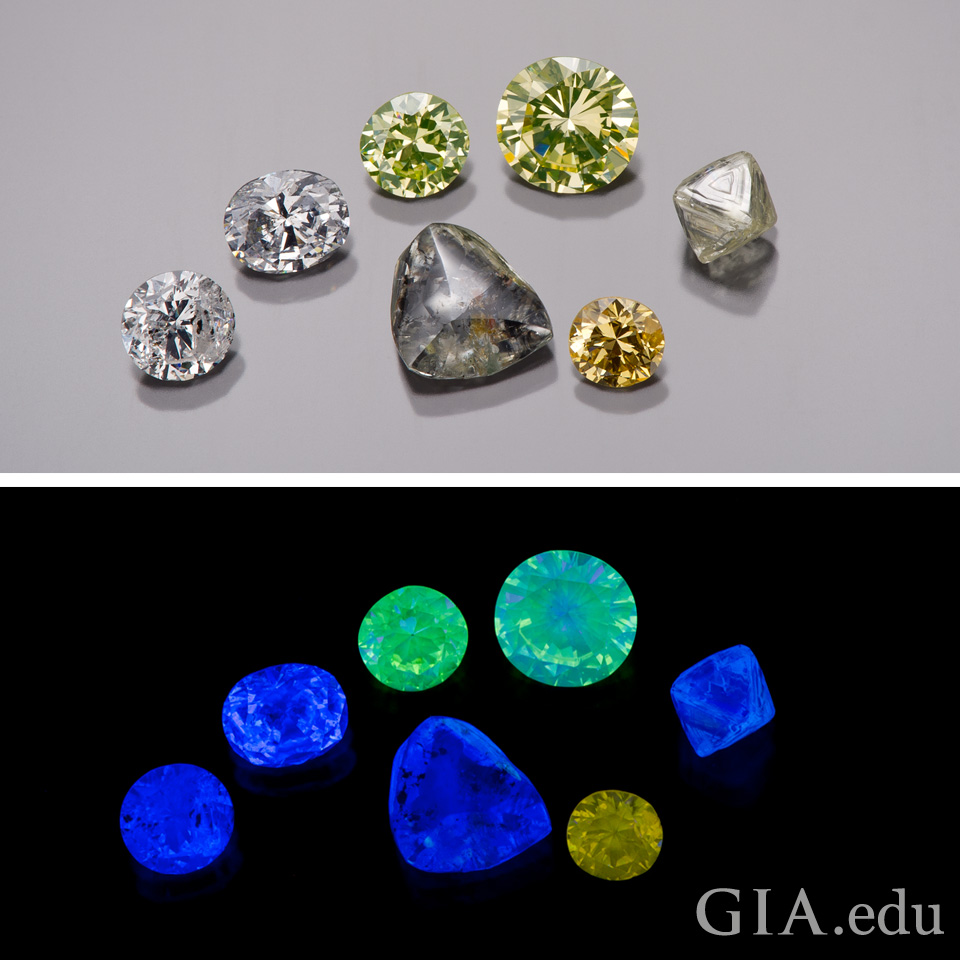
Diamonds under uv light. If the diamond reflects a blue fluorescence, it is most likely authentic. Fluorescence is when a diamond shows a soft glow under ultraviolet (uv) light. Most diamonds with fluorescence will glow blue.7 thg 11, 2017.
Previous article how fast moving stream of dog cell. About 95% of these diamonds emit bluish light when you expose them to ultraviolet (uv) rays coming from the sun or fluorescent lamps. Approximately 30% of diamonds glow at least somewhat.
And as soon as you remove the source of uv light, the glow stops. This effect is totally natural, appearing in a third of all diamonds. Uv light results in many such diamonds glowing.
Do diamonds glow under uv light? This describes the phenomena of a diamond emitting a blue glow when viewed under uv light. This is caused by certain minerals in the diamond.
Next article what is physiological problem in low water availability. This is the same effect the diamond has under the uv rays. This can cause them to emit a bluish light or more rarely, a yellow or orangy light.
Fake diamonds, on the other hand, will glow other colors or not at all. Some diamonds fluoresce under uv light. Fluorescence is when a diamond shows a soft glow under ultraviolet (uv) light.
When a diamond is exposed to ultraviolet light (also known as blacklight), it glows blue. This is caused by certain minerals in the diamond. Some diamonds do not glow under uv light.
Usually, diamonds emit a bluish light, or more rarely, a yellow or orange light. Diamonds that are said to be fluorescent contain particles that emit a visible (usually blue) glow when exposed to uv lighting. If you have been researching certification and diamond quality, you may have heard the term fluorescence.
Most diamonds with fluorescence will glow blue. Diamonds can be fluorescent, too. Do diamonds glow under uv light.
Reviewing your diamond certificate, fluorescence will typically appear with a description such as: About 30% of diamonds will glow blue under ultraviolet lights such as black light. Fake diamonds may stay fogged for 2 seconds or longer according to national jeweler’s supply.
This glow can range from faint to very strong. Most diamonds with fluorescence will glow blue. Diamonds can also glow under uv light.
For this reason, if the stone does not glow, the results don’t necessarily indicate that it’s a fake diamond. Fake diamonds, on the other hand, will glow other colors or not at all. Do lab diamonds glow in uv lights like natural diamonds?
Fluorescence is the visible light. In rare cases, high levels of fluorescence can make stones appear milky or hazy, although for the most part fluorescence does not generally impact beauty or sparkle and can even make some lower colours (i, j, k, l, etc.) appear more colourless or white. When you stand under a blue light or ultraviolet light, sometimes you can see your whites get brighter or your teeth appear to glow.
Hold the diamond in question under a long wave uv light (also called a black light). The strength of fluorescence exhibited by the new synthetic emerald coated beryl depends on the thickness of the coating over the natural core. Be aware that while the majority of diamonds on the market will have a blue glow.
Once the uv light source is removed, the diamond stops fluorescing. The intensity of glow is taken into account while grading a diamond. When a diamond is exposed to ultraviolet light (also known as blacklight), it glows blue.
The fluorescence of lab diamonds is often stronger than natural diamonds and displays a distinctive pattern when exposed to uv light. This phenomena is called flourescence. Similar to natural diamonds, blue fluorescence is the most commonly observed color.
This effect is totally natural, appearing in a third of all diamonds. A diamond’s fluorescence refers to the soft glow it gives off in ultraviolet light. Most diamonds will emit a blue colored glow, but not all of them.
This is caused by certain minerals in the diamond. Sometimes you might see another color too like yellow, green, red & white, but blue is the most common fluorescent color in a diamond. This effect is totally natural, appearing in a third of all diamonds.
Less than 5% of fluorescent diamonds will glow yellow, green, orange, or white. Diamonds have a tendency to flouresce or glow under long wave ultraviolet light. Fluorescence is when a diamond shows a soft glow under ultraviolet (uv) light.
To test if a diamond is real in a different way, place it under a uv light and watch the reaction. Some synthetic diamonds may not display fluorescence at all. Nil, very slight, slight, medium, or strong.
Diamond fluorescence, in its most simple form, is the effect that ultraviolet (uv) light has on a diamond. About 30% of diamonds will glow blue under ultraviolet lights such as black light. 99% of the time, the glow is blue, but on rare occasions, diamonds glow white, yellow, green, or even.
Less than 5% of fluorescent diamonds will glow yellow, green,…. Diamond fluorescence refers to the effect of uv light on a diamond. Diamonds graded with strong fluorescence may exhibit a milky appearance, especially in strong sunlight.
What color should a diamond be under uv light? Which fake diamond is the best? Rarely, the emitted light can be yellow, green, red, or orangy.
Will all diamonds show fluoresce? This phenomenon is usually caused by nitrogen, boron, or aluminum impurities present in the diamond’s automatic structure. Why does my diamond glow under uv light.
Why do my diamonds glow under uv light? When put under a diamond view machine, hpht diamonds show a cross. Some diamonds fluoresce when they are exposed to ultraviolet (uv) rays from sources like the sun and fluorescent lamps.
Lab grown diamonds can display fluorescence too and this is caused by submicroscopic structures within the crystal during the growing process.
Previous post
Diapers for 13 year oldsNext post
Diamonds under black light