29
Nov
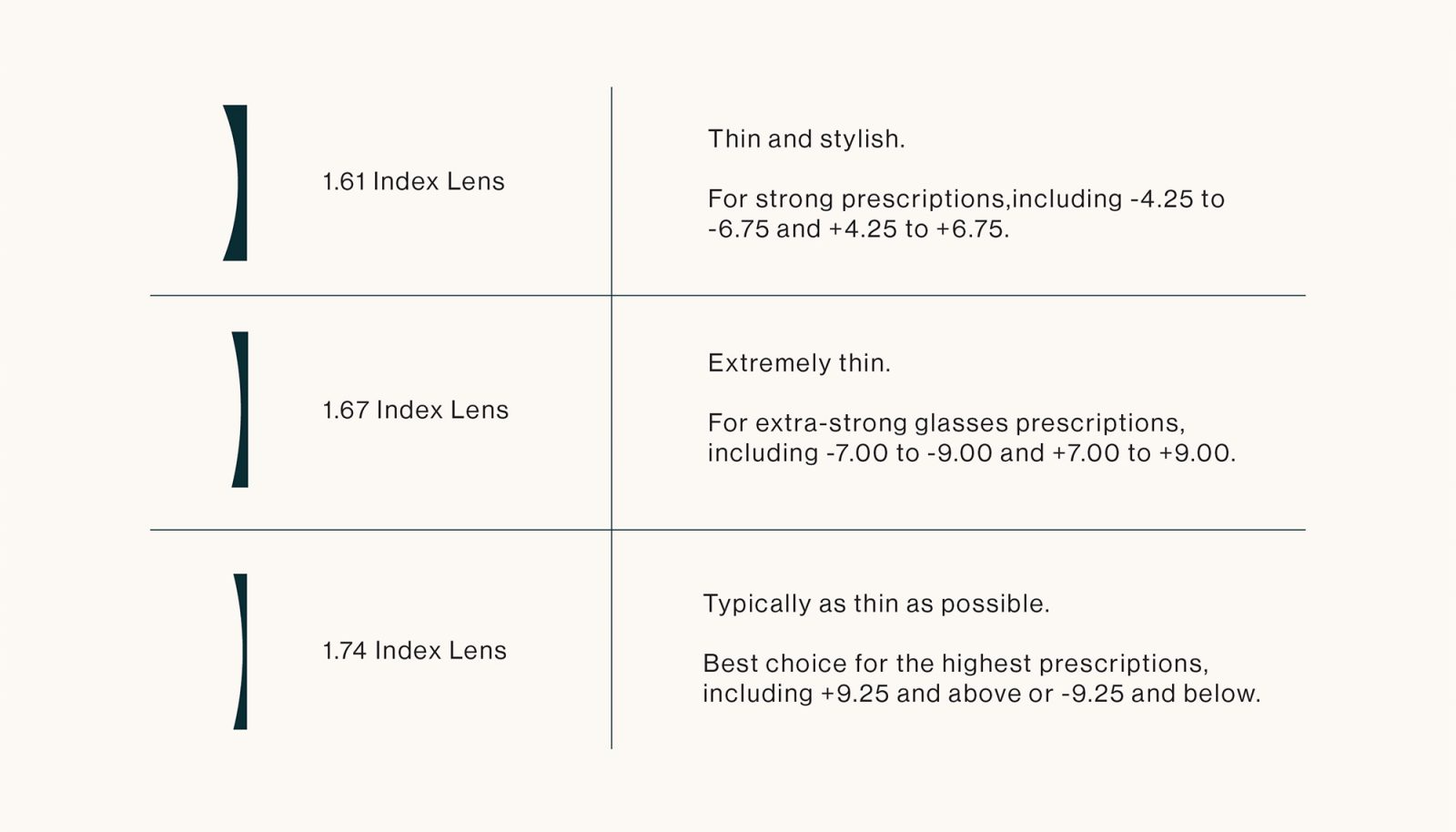
To understand this, you should know that lens thickness is generally categorized into 4 groups, or we normally call it “index” ie 1.56, 1.61, 1.67 and 1.74. Vision ease liferx® photochromic lenses are available in 1.59 (polycarbonate) transitions® vii are available in 1.50, 1.61, and 1.67.
Difference between 1 61 and 1 67 lenses. As you look away from the optical center of the lens towards the edge you should experience less abberation and distortion (most commonly seeing a straight edge as slightly. To understand this, you should know that lens thickness is generally categorized into 4 groups, or we normally call it “index” ie 1.56, 1.61, 1.67 and 1.74. Thinner lenses are lightweight (and more stylish!) and can accommodate many kinds of vision needs, including higher prescriptions.
In your prescription there would be minimal difference in the thickness between 1.6 and 1.67, however aspheric lenses would be better, as they are designed to have better off axis performance i.e. 1.67 high index lenses are much less costly compared to 1.74. Though both reduce the eye distortion caused by strong prescriptions (making your eyes look bigger or smaller than they are), 1.74 high index lenses accomplish this better than 1.67 high index lenses do.
What lens index is available for each type of photochromic lens? These lenses can be less than half the weight of regular glass lenses and 25% to 30% lighter than regular plastic lenses. It is with those thicker lenses at higher prescriptions, that we start to experience optical distortion that is notable, when wearing that correction for many.
Compared with the 1.5 lenses, 1.6 lenses are thinner and they can work well with thinner metal frames so they will look better. 1.67 will cost more and have more abberations. The thing is, i�m torn between the 1.61 and 1.67 high index range.
Sunglasses with photochromic lenses cost between $75 and $400 a pair. Frame size and shape is going to have a bigger effect on thickness than index. In many cases, this can bring the total cost of a pair of glasses to nearly $1,000.
However, do take note that this does not take into consideration of astigmatism which can add extra thickness. The difference between 1.67, which is considered regular index and 1.74 is quite small, and really, the only way you’ll notice the difference is if you have a. When should you go for 1.67 high index lenses?
Getting photochromic technology added to a pair of prescription eyeglasses usually adds between $100 and $400 to the total cost of those glasses. Zenni photochromic lenses are available in 1.61. 1.74 high index lenses are thinner and lighter than 1.67 high index lenses.
The latter is simply thinner, and lighter, than the former. My right eye is still safely in that 1.61 is fine range, but the left eye obviously requires a thicker lens. What is the difference between 1.61 and 1.67 index lenses?
3)if you are considering photochromatic lenses(transitions), your only choice in high index is with the 1.67 material. Photochromic lenses sometimes are covered by. If you have any more questions or ar.
And that is the basic difference between 1.67 and 1.74 high index lenses: 2)if you have a frame picked out already and it is quite small/or plastic the difference between the two in edge thickness will be very small. 1.67 high index lenses are available in.
That�s what�s discussed in this video. Vision ease liferx® photochromic lenses are available in 1.59 (polycarbonate) transitions® vii are available in 1.50, 1.61, and 1.67. What is the difference between a 1.74 high index lens and a 1.67 high index lens?
Lenses with a refraction index of 1.7 or higher are at least 50 percent thinner than those with a regular index. The 1.61 high index lenses are thin and stylish. Your prescription is very mildly common, so unless you are extremely concerned with edge thickness or eye minification, then you will.
The higher the index, the thinner the lens is. Trivex has the lowest specific gravity of popular eyeglass lens materials. The difference between 1.60 and 1.67 is going to be minimal, most likely less than a millimeter.
Zenni blokz™ photochromic lenses are available in 1.61 and 1.67; Besides, they are very light. In terms of balancing price and quality, 1.59 index polycarbonate lenses accommodate most prescriptions and are extra durable.
Thicker lenses are more affordable, but can only accommodate lower vision correction needs. It can even be a good choice for people with low prescriptions who want the additional lens benefits mentioned above. The 1.67 high index lenses are extremely thin, so they are an excellent option for.
It is said that 1.6 lenses are 25% thinner than standard plastic lenses so that they are ideal for higher prescriptions.
Previous post
Difference between 10k and 14k white goldNext post
Diesel or gas truck for daily driver